

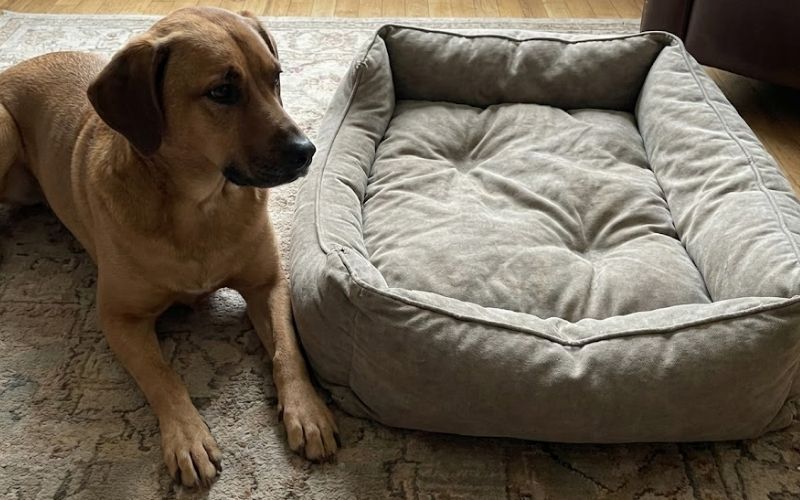
Dog beds don't last forever.
But how do you know when it's time to replace one? Many owners wait too long—using flattened, worn-out beds that no longer support their dog properly.
After years of testing beds with 6 dogs, I've learned exactly when a bed needs replacing. Here are the 7 clear signs it's time for a new one.
Quick Answer: How Long Do Dog Beds Last?
| Bed Quality | Expected Lifespan | Action |
|---|---|---|
| Budget beds | 6-12 months | Check Price |
| Mid-range beds | 1-3 years | Check Price |
| Premium beds | 3-7 years | Check Price |
| High-end orthopedic | 7-10+ years | Check Price |
Factors that shorten lifespan: Heavy dogs, chewers, frequent washing, cheap materials, outdoor use.
The 7 Signs Your Dog's Bed Needs Replacing
1. The Foam Has Flattened
The most common reason to replace a bed.
Press your hand into the centre of the bed where your dog lies most. If the foam:
- Doesn't bounce back
- Feels thin or compressed
- Has a permanent body impression
- Lets you feel the floor through it
It's time to replace.
Flattened foam provides zero support. Your dog is essentially sleeping on the floor with a thin layer of fabric on top.
The test: Press firmly with your palm. Quality foam should spring back within 2-3 seconds. If it stays compressed or takes longer, the foam is worn out.
Why it matters: Flattened beds don't support joints. For dogs with arthritis or joint issues, this can cause pain and worsen their condition.
2. Your Dog Stopped Using It
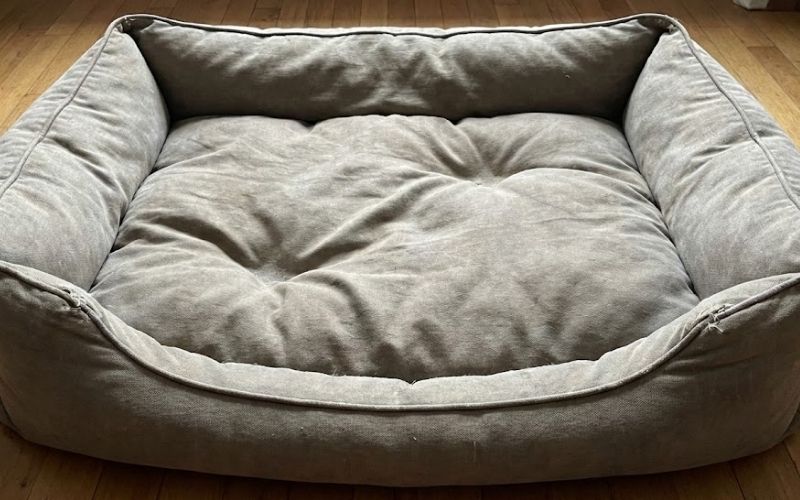
Dogs know when their bed isn't comfortable anymore.
Signs your dog has abandoned their bed:
- Sleeping on the floor instead
- Moving to the sofa or your bed
- Lying next to the bed rather than on it
- Only using the bed briefly before moving
What to check:
- Has the foam flattened?
- Is the bed too hot/cold?
- Is it in a bad location?
- Is it the wrong size now?
If the bed is still in good condition but your dog won't use it, try moving it to a different spot. If they still avoid it, the bed itself is likely the problem.
3. It Smells Bad (Even After Cleaning)
Dog beds develop odours over time. Regular cleaning should control this.
Time to replace if:
- Smell returns immediately after washing
- Deep cleaning doesn't help
- The foam itself smells (not just the cover)
- Enzyme cleaners don't eliminate urine odours
Why this happens:
Odours seep into the foam over time. Once bacteria and odour molecules penetrate the foam structure, surface cleaning won't reach them.
Health concern: Persistent odours often indicate bacteria buildup. This isn't just unpleasant—it can affect your dog's skin and respiratory health.
Read more: How to Clean a Dog Bed
4. The Cover Is Damaged Beyond Repair
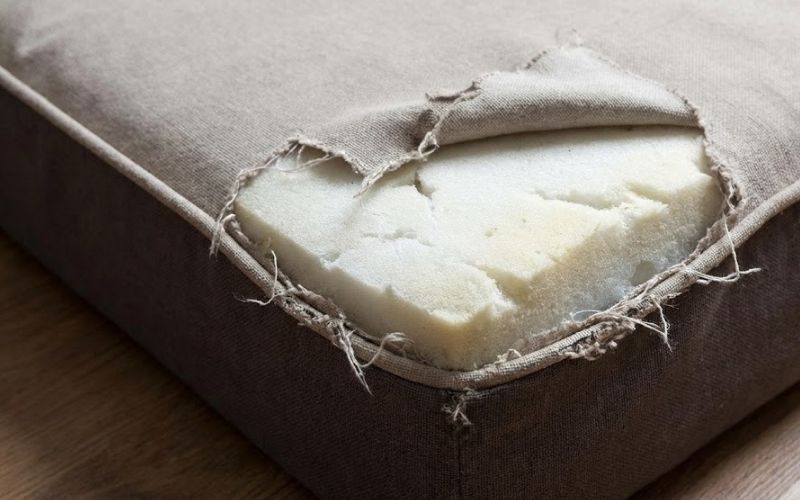
Normal wear on covers is expected. But significant damage means it's time to replace.
Replace if:
- Large tears or holes in the fabric
- Seams splitting open
- Zipper broken and won't close
- Waterproof backing has failed
- Fabric is threadbare or worn through
Can you just replace the cover?
Sometimes. Many premium beds sell replacement covers. Check if:
- The foam is still in good condition
- Replacement covers are available
- Cost of cover vs. new bed makes sense
If the foam is also worn, replace the entire bed.
5. You Can See or Feel Lumps
Quality foam should be uniform throughout.
Warning signs:
- Visible lumps under the cover
- Uneven surface when you press
- Hard spots or soft spots
- Filling has shifted to the edges
What causes lumps:
- Cheap foam breaking down
- Polyfill stuffing clumping
- Water damage causing foam to deteriorate
- General wear and compression
Why it matters: Lumpy beds create pressure points. Instead of even support, your dog's weight concentrates on certain areas—the opposite of what a bed should do.
6. Your Dog's Needs Have Changed
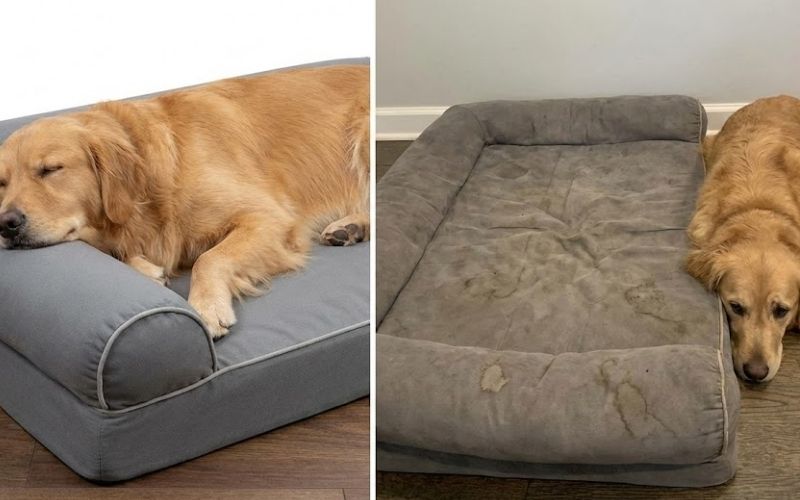
Sometimes the bed is fine, but it's no longer right for your dog.
Time for a different bed if:
- Your dog has aged – Senior dogs need more orthopedic support
- Joint issues developed – Arthritis requires proper support
- Weight changed significantly – Heavier dogs need thicker foam
- Mobility decreased – May need lower profile for easy access
- Temperature regulation issues – May need cooling or warming features
Charlie's story: When Charlie was diagnosed with hip dysplasia at age 6, his regular bed wasn't cutting it anymore. He needed a proper orthopedic bed with thick memory foam. Same dog, different needs.
7. It's Just Been Too Long
Even beds that look okay wear out internally.
General replacement guidelines:
| Dog Size | Budget Bed | Quality Bed | Action |
|---|---|---|---|
| Small (under 25 lbs) | 1 year | 3-5 years | |
| Medium (25-50 lbs) | 8-12 months | 2-4 years | |
| Large (50-75 lbs) | 8-12 months | 2-3 years | |
| Giant (75+ lbs) | 6 months | 1-2 years |
Heavy dogs compress foam faster. A bed that lasts 5 years for a 30-pound dog might last 2 years for an 80-pound dog.
How to Make Dog Beds Last Longer
Buy Quality Initially
Cheap beds need replacing more often. A £150 bed that lasts 5 years costs less than five £40 beds.
What to look for:
- High-density foam (4+ lbs/ft³)
- Removable, washable covers
- Quality stitching and zippers
- Good warranty (indicates manufacturer confidence)
Read more: Best Orthopedic Dog Beds
Use a Waterproof Liner
Moisture is foam's enemy. Waterproof liners protect against:
- Urine accidents
- Drool
- Wet fur after rain/swimming
- Spills
A £20 liner can add years to a bed's life.
Clean Regularly (But Not Too Much)
Clean enough to:
- Remove dirt and bacteria
- Prevent odour buildup
- Keep the bed hygienic
But don't over-wash:
- Excessive washing wears out fabric
- Heat damages foam over time
- Detergent residue can build up
Read more: How to Clean a Dog Bed
Rotate and Flip
If your bed allows:
- Rotate 180° monthly
- Flip over if reversible
- Distribute wear evenly
This prevents one spot from compressing faster than others.
Keep Nails Trimmed
Long nails snag and tear fabric. Regular nail trims protect your dog's bed (and your furniture).
The Real Cost of Not Replacing
Keeping a worn-out bed too long isn't saving money.
Joint Problems
Dogs sleeping on flattened beds don't get proper support. Over time, this can:
- Worsen existing joint issues
- Contribute to arthritis development
- Cause stiffness and pain
- Reduce mobility
Vet bills for joint problems far exceed bed replacement costs.
Poor Sleep Quality
Dogs need quality sleep just like humans. A bad bed means:
- Restless sleep
- Frequent position changes
- Not reaching deep sleep
- Fatigue and irritability
Skin and Hygiene Issues
Old beds harbour:
- Bacteria
- Dust mites
- Allergens
- Mould (if moisture got in)
These can cause skin irritation, allergies, and respiratory issues.
How to Choose a Replacement
When it's time to replace, consider:
1. What Failed on the Old Bed?
- Foam flattened? → Get higher density foam
- Cover tore? → Get more durable material
- Got smelly fast? → Get better waterproofing
- Dog stopped using it? → Consider different style/size
2. Has Your Dog Changed?
- Older now? → Prioritise orthopedic support
- Bigger/smaller? → Resize appropriately
- Health issues? → Get appropriate support
- New preferences? → Different style
3. What's Your Budget?
| Budget | Recommendation | Action |
|---|---|---|
| Limited | Bedsure or similar (accept shorter lifespan) | |
| Moderate | FurHaven, PetFusion (good balance) | |
| Investment | Big Barker, Casper (long-term value) |
Bed Lifespan by Brand
Based on my experience and research:
| Brand | Typical Lifespan | Warranty | Action |
|---|---|---|---|
| Big Barker | 7-10+ years | 10 years | Check Current Price |
| Bully Beds | 7-10+ years | 20 years | Check Current Price |
| Casper | 3-5 years | 1 year | Check Current Price |
| PetFusion | 2-4 years | 1 year | Check Current Price |
| FurHaven | 1-3 years | Limited | Check Current Price |
| K9 Ballistics | 3-5+ years | 120 days chew / 10 years flatten | Check Current Price |
| Bedsure | 6-18 months | Limited | Check Current Price |
Note: Lifespan varies significantly based on dog size, use, and care.
Quick Checklist: Should You Replace?
Answer these questions:
☐ Does the foam spring back when pressed?
☐ Is the bed free of permanent body impressions?
☐ Does your dog actually use the bed?
☐ Is the bed odour-free after cleaning?
☐ Is the cover intact without major damage?
☐ Is the surface even without lumps?
☐ Does the bed still suit your dog's current needs?
If you answered "No" to any of these, consider replacing.
Summary
Replace your dog's bed when:
- ❌ Foam has flattened and won't bounce back
- ❌ Your dog stopped using it
- ❌ It smells bad even after cleaning
- ❌ Cover is damaged beyond repair
- ❌ You can see or feel lumps
- ❌ Your dog's needs have changed
- ❌ It's simply been too long
Don't wait until the bed is completely destroyed. A worn-out bed affects your dog's comfort, sleep quality, and joint health.
The best time to replace is before your dog suffers on a bad bed—not after.
Not sure if your bed needs replacing? Contact me with details and I'll help you decide.
Related Articles:
We’ve paused the on-page review box for now because we were getting too many spam submissions. If you’d like to share your experience, please send it through our contact form and I’ll add it manually. Thanks for understanding — genuine feedback really helps other dog owners. John Henry