

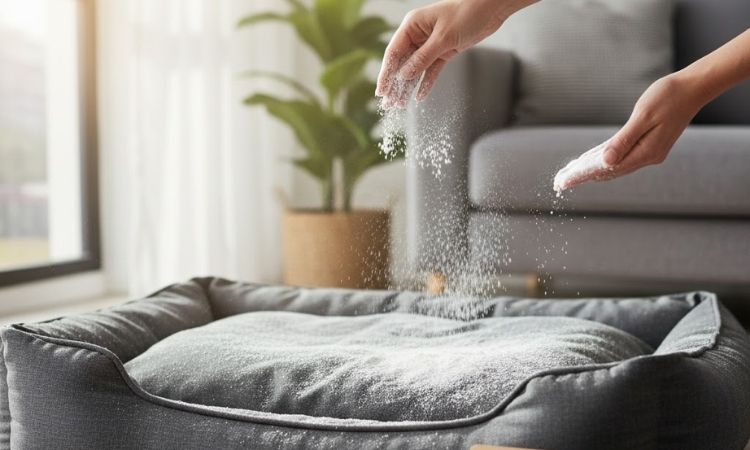
Dog beds get smelly. It is inevitable.
Between body oils, drool, dirt, and that distinctive "dog smell," beds can become unpleasant surprisingly quickly. Here is how to eliminate odours and keep your dog's bed smelling fresh.
Why Dog Beds Smell
Understanding the cause helps you address the problem:
Natural Body Oils
Dogs produce oils that keep their coat healthy. These oils transfer to bedding and can develop a rancid smell over time.
Bacteria and Yeast
Warm, moist environments breed bacteria and yeast. Dog beds provide ideal conditions, especially in skin folds and around drool spots.
Dirt and Debris
Dogs bring in dirt, grass, and outdoor matter. This organic material decomposes and creates odours.
Drool and Saliva
Heavy droolers leave moisture that breeds bacteria. Dried drool also leaves residue that smells.
Accidents
Even house trained dogs occasionally have accidents. Urine creates strong, persistent odours if not properly cleaned.
Skin Conditions
Dogs with skin infections, allergies, or yeast overgrowth produce stronger odours that transfer to beds.
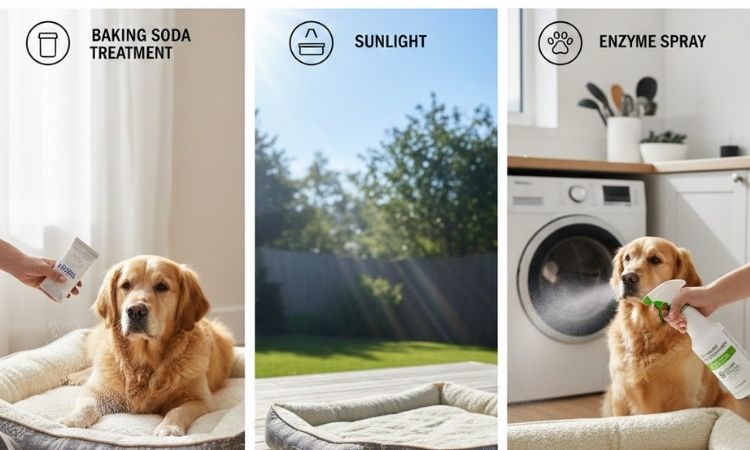
Quick Fixes for Smelly Dog Beds
Baking Soda Treatment
What you need: Baking soda, vacuum
How to do it:
- Remove the bed cover if possible
- Sprinkle baking soda liberally over the entire bed
- Work it into the fabric slightly
- Leave for 15 to 30 minutes (longer for strong odours)
- Vacuum thoroughly
Why it works: Baking soda absorbs and neutralises odours rather than just masking them.
Best for: Quick freshening between washes.
Sunlight Treatment
What you need: Sunny day
How to do it:
- Place the bed outside in direct sunlight
- Leave for several hours
- Flip halfway through for even exposure
Why it works: UV rays kill bacteria and naturally freshen fabrics. Sunlight also helps dry any moisture.
Best for: Regular freshening, after washing, natural deodorising.
Enzyme Spray
What you need: Pet enzyme cleaner spray
How to do it:
- Spray the bed surface thoroughly
- Allow to dry completely
- Repeat if odour persists
Why it works: Enzymes break down organic matter causing the smell at a molecular level.
Best for: Strong odours, accident spots, stubborn smells.
Deep Cleaning Smelly Dog Beds
For Machine Washable Beds
What you need:
- Washing machine
- Pet safe laundry detergent
- White vinegar
- Baking soda
Steps:
- Pre treat stains. Apply enzyme cleaner to visible spots. Let sit 10 minutes.
- Remove loose debris. Shake bed outside, vacuum, or lint roll.
- Wash the cover. Remove cover if possible. Wash on warm (not hot) with pet safe detergent.
- Add odour fighters. Add 1/2 cup white vinegar to the rinse cycle OR 1/2 cup baking soda to the wash cycle. Do not use both together.
- Dry thoroughly. Tumble dry low or air dry completely. Damp beds grow mildew.
- Clean the insert. If the foam insert smells, see "Cleaning Foam Inserts" below.
For Non Removable Covers
What you need:
- Spray bottle
- Water
- White vinegar
- Enzyme cleaner
- Baking soda
- Vacuum
Steps:
- Vacuum thoroughly. Remove all loose debris, hair, and dirt.
- Apply enzyme cleaner. Spray entire surface and let sit according to product directions.
- Make cleaning solution. Mix equal parts water and white vinegar in spray bottle.
- Spray and scrub. Lightly spray the bed (do not soak). Scrub with a brush.
- Apply baking soda. Sprinkle over damp surface.
- Let dry completely. Air dry fully before use.
- Vacuum again. Remove baking soda residue.
Cleaning Foam Inserts
Foam cannot be machine washed but can be cleaned:
For light odours:
- Sprinkle with baking soda
- Leave overnight
- Vacuum thoroughly
For stronger odours:
- Mix mild detergent with water
- Use a cloth to wipe the foam surface
- Do not soak the foam
- Rinse with clean damp cloth
- Allow to dry completely (this takes time)
For stubborn odours:
- Use enzyme cleaner spray
- Apply lightly (do not saturate foam)
- Allow to dry completely
- May need to repeat
Important: Never put foam in a washing machine or dryer. Never soak foam as it is difficult to dry fully and can grow mould.
Preventing Dog Bed Odours
Wash Regularly
Covers: Weekly or every two weeks
Entire bed: Monthly or as needed
Why it matters: Regular washing prevents odour buildup. Waiting until the bed smells means you are fighting entrenched odours.
Use Protective Layers
Blanket on top: Add a washable blanket that absorbs oils and dirt before they reach the bed. Wash the blanket frequently.
Waterproof liner: Prevents accidents from reaching foam. Easier to clean.
Groom Your Dog
Regular bathing: Clean dogs transfer less oil and dirt to beds.
Brushing: Removes loose fur and distributes oils so less transfers to bedding.
Ear care: Dogs with ear infections produce more odour.
Skin treatment: Address any skin conditions causing excess odour.
Address Medical Issues
If your dog smells particularly strong, consult your vet. Conditions that increase odour:
- Yeast infections
- Skin allergies
- Ear infections
- Dental disease
- Anal gland issues
Treating the underlying condition reduces bed odour.
Choose the Right Bed
Some beds resist odours better than others:
Better for odour resistance:
- Elevated beds (mesh does not absorb)
- Beds with removable, washable covers
- Waterproof beds
- Beds with antimicrobial treatments
Worse for odours:
- Thick plush beds
- Beds without removable covers
- Beds that cannot be fully washed
- Beds with exposed foam
Products That Help
Enzyme Cleaners
Enzyme cleaners break down organic matter causing odours. Brands like Nature's Miracle, Rocco and Roxie, and Angry Orange work well.
Use for: Accident cleanup, stubborn odours, regular freshening.
Pet Safe Deodorisers
Sprays that neutralise odours between washes. Look for products specifically designed for pet bedding.
Use for: Quick freshening, between washes.
Baking Soda
Simple, effective, and cheap. Absorbs odours without chemicals.
Use for: Regular freshening, odour absorption.
White Vinegar
Natural deodoriser and mild disinfectant. Safe for most fabrics.
Use for: Laundry additive, spray solutions.
Activated Charcoal
Absorbs odours. Available in pouches that can be placed near beds.
Use for: Ambient odour control, storage areas.
What NOT to Do
Do Not Use Strong Fragrances
Perfumes, scented sprays, and strongly scented detergents can:
- Irritate your dog's sensitive nose
- Cause skin reactions
- Mask odours without eliminating them
- Make your dog avoid the bed
Do Not Soak Foam
Foam that gets waterlogged:
- Takes days to dry
- Can grow mould inside
- May never fully dry
- Becomes damaged
Do Not Use Bleach
Bleach:
- Can damage fabrics
- Leaves residue harmful to dogs
- May cause discoloration
- Is usually unnecessary
Do Not Ignore Underlying Issues
If your dog's bed smells extremely bad despite cleaning:
- Check your dog for health issues
- The bed may need replacing
- Consider a different bed type
When to Replace a Smelly Bed
Sometimes cleaning is not enough. Replace the bed when:
- Odour persists after thorough cleaning
- Foam has absorbed urine or fluids deeply
- Mould or mildew is visible
- Structural damage prevents proper cleaning
- The bed is several years old
- Multiple cleaning attempts have failed
Budget beds may need replacing after 1 to 2 years. Quality beds with removable, washable covers can last much longer.
Odour Prevention Schedule
Daily:
- Shake out and fluff the bed
- Quick spot check for accidents
Weekly:
- Vacuum the bed
- Wash the top blanket if using one
- Baking soda treatment if needed
Every 2 Weeks:
- Wash bed cover
Monthly:
- Deep clean entire bed
- Treat foam insert if needed
- Sunlight treatment
Quarterly:
- Assess bed condition
- Replace if necessary
Frequently Asked Questions
How often should I wash my dog's bed?
Covers every 1 to 2 weeks. Entire bed monthly. More often for dogs with skin issues, allergies, or who get very dirty.
Why does my dog's bed smell so bad?
Accumulation of body oils, bacteria, dirt, and possibly accidents. Regular washing prevents buildup. Persistent bad smell may indicate a health issue with your dog.
Can I use Febreze on my dog's bed?
Most fabric fresheners are not recommended for pet bedding. They mask odours rather than eliminate them and may irritate your dog. Use enzyme cleaners instead.
How do I get urine smell out of a dog bed?
Use enzyme cleaner immediately. For dried urine, saturate the area with enzyme cleaner, let sit, then wash. For foam that has absorbed urine, replacement may be necessary.
Why does my dog's bed smell even after washing?
Possible causes: not drying completely (mildew), odour in foam not cover, need multiple washes, underlying medical issue with dog, or bed needs replacing.
Is the smell harmful to my dog?
Mild dog smell is normal and not harmful. Strong odours, especially musty or ammonia smells, can indicate bacteria or mould that should be addressed.
The Bottom Line
Dog beds will always develop some odour. The goal is managing it through regular cleaning and prevention:
Key practices:
- Wash covers every 1 to 2 weeks
- Use baking soda between washes
- Choose beds that are easy to clean
- Address your dog's hygiene too
- Replace beds that cannot be deodorised
A fresh smelling bed is better for both you and your dog. Regular maintenance is easier than fighting entrenched odours.
Related Articles:
We’ve paused the on-page review box for now because we were getting too many spam submissions. If you’d like to share your experience, please send it through our contact form and I’ll add it manually. Thanks for understanding — genuine feedback really helps other dog owners. John Henry