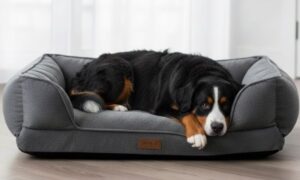


Breed-specific bed guides are great if you have a purebred dog. But what if your dog is a Beagle-Labrador mix? A Boxer-Shepherd cross? A rescue with unknown parentage? Standard breed sizing charts don't work when your dog is a unique combination of two or more breeds.
Mixed breed dogs make up the majority of pet dogs in the US and UK, and they come in every possible combination of size, shape, coat type and temperament. The good news is that choosing the right bed isn't complicated once you know what to look for. You just need to focus on your individual dog rather than their breed label. If you already know your dog's approximate breed mix, you might also find our breed-specific bed guides helpful as a starting point.
Why Mixed Breeds Need a Different Approach to Bed Sizing
Purebred dogs are relatively predictable. A Labrador is going to weigh 55 to 80 pounds and measure roughly 22 inches at the shoulder. But a Lab-Collie mix could weigh anywhere from 35 to 75 pounds depending on which parent they take after. A Beagle-Spaniel cross might have the Beagle's stocky build or the Spaniel's leggier frame.
This unpredictability means you can't just look up a size chart and pick a bed. Instead, you need to measure your actual dog and observe how they sleep. These two pieces of information will tell you more than any breed label ever could.
How to Measure Your Mixed Breed Dog for a Bed
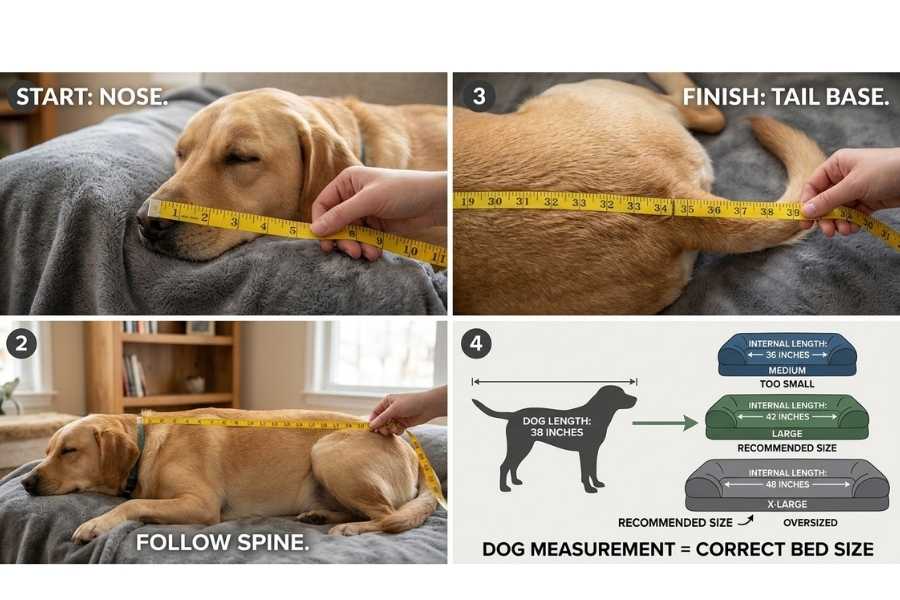
The measuring process is the same regardless of breed. For a complete walkthrough with visual references, see our dog bed size guide. Here's the quick version:
Step 1: Measure your dog from the tip of their nose to the base of their tail while they're lying in their most common sleeping position. Don't include the tail.
Step 2: Add 6 to 12 inches to that measurement. Add 6 inches if your dog curls up tightly. Add 12 inches if they sprawl out fully.
Step 3: Weigh your dog. This determines how thick and supportive the bed needs to be, not just how large.
Step 4: If you're choosing a bolster bed, remember that bolsters reduce the actual sleeping area. A 36 x 28 inch bolster bed might only have 26 x 20 inches of usable sleep space. For more on this, check our guide to bolster dog beds.
Quick Size Reference by Weight
| Dog Weight | Bed Size | Bed Label | Example Mixes |
| Under 15 lbs | 20-25 inches | Small | Chihuahua mixes, Yorkie mixes, toy crosses |
| 15-40 lbs | 30-36 inches | Medium | Beagle-Spaniel, Corgi-Retriever, Border Terrier mixes |
| 40-70 lbs | 36-42 inches | Large | Boxer-Shepherd, Lab-Collie, Husky-Retriever |
| 70-100 lbs | 42-52 inches | Extra Large | Rottweiler-Collie, Retriever-GSD, large Labradoodles |
| Over 100 lbs | 52+ inches | Giant/XXL | Rottweiler-Mastiff, Dane mixes, Newfoundland crosses |
For dogs over 100 lbs, see our dedicated giant dog beds guide and our extra large dog beds page for specific product recommendations.
Sleeping Style Matters More Than Breed
Watch how your dog actually sleeps. This tells you more about what bed to buy than knowing they're half Labrador.
The Sprawler: Dogs that stretch out fully on their side need flat, rectangular beds with plenty of surface area. No bolsters or donut shapes. They'll outgrow the sleeping area fast. Look at our orthopedic bed guide for flat options with good support.
The Curler: Dogs that curl into a tight ball love donut beds and cave beds. The raised edges provide security and warmth. Curlers can often use a slightly smaller bed than their measurements suggest.
The Burrower: Some mixed breeds, especially those with terrier, Dachshund or sighthound heritage, love to burrow under blankets. A hooded or cave-style bed satisfies this instinct. See our cave beds guide for options.
The Leaners: Dogs that rest their head on furniture, pillows or your leg do best with bolster beds. The raised edges act as a built-in pillow.
Common Mixed Breed Combinations and Bed Recommendations
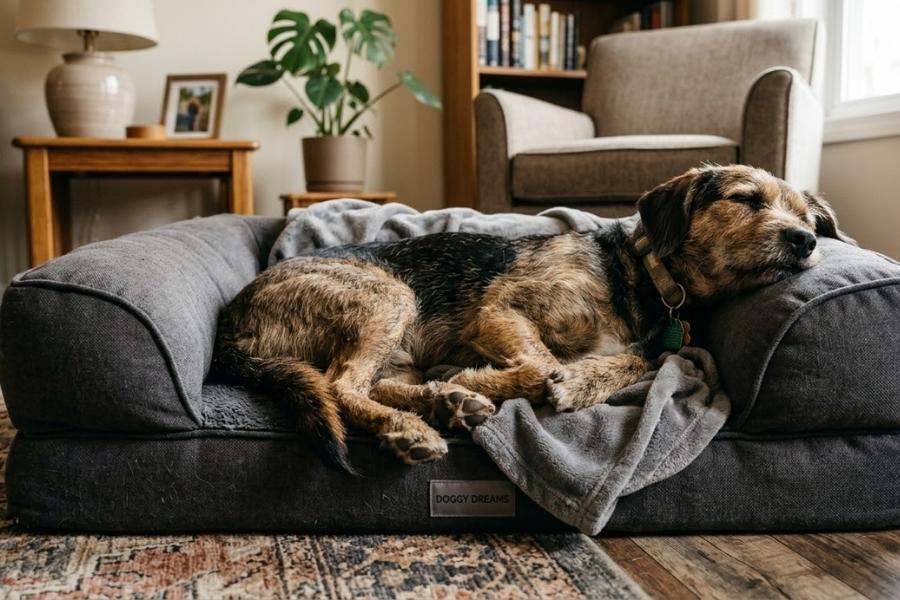
Beagle-Labrador Mixes (30-60 lbs)
These dogs tend to be stocky, food-motivated and prone to weight gain. They usually fall in the medium to large range but can vary widely. Beagles love to burrow and nest while Labradors tend to sprawl and overheat. A medium to large bolster bed with a washable cover is usually the best compromise. If your mix runs hot like the Lab side, consider a cooling bed for summer months.
Boxer-Shepherd Mixes (50-80 lbs)
Large, active dogs that can be tough on beds. Both breeds are prone to joint issues, so orthopedic support matters. A large orthopedic bed with at least 4 inches of high-density foam is ideal. German Shepherds are known for hip dysplasia, and if your mix inherits that tendency, a bed with proper joint support becomes essential. See our hip dysplasia bed guide for specific recommendations.
Corgi-Retriever Mixes (25-50 lbs)
An interesting combination that often results in a medium-sized dog with shorter legs and a longer body. Corgis need beds that support their elongated spine, so look for beds with a low entry point and firm, even support. The Retriever side often brings shedding and a love of water, so a washable bed is a smart choice.
Husky-Retriever Mixes (45-70 lbs)
Double-coated and prone to overheating. These dogs often avoid plush beds in warmer months and prefer cool surfaces. An elevated bed or cooling bed works well for summer, with a warmer option like a self-warming bed for winter. See our Husky bed guide for more on managing thick-coated dogs.
Rottweiler-Mastiff Mixes (80-130+ lbs)
Heavy dogs that need serious support. Standard beds will flatten quickly under this kind of weight. Look for beds with at least 7 inches of high-density foam or an elevated bed rated for their weight. Our large breed bed guide covers the best options for heavy dogs, and the Rottweiler guide has breed-specific advice on durability.
Mixed Breed Rescue Dogs: Extra Considerations
If you've adopted a rescue dog with unknown parentage, you have even less breed information to work with. That's perfectly fine. Measure, weigh and observe. If your rescue seems anxious or unsettled, a calming bed with raised edges can help them feel more secure. Many rescue dogs take a few days to settle into a new bed, so don't worry if they ignore it at first. See our guide on why dogs won't use their bed for tips on helping a reluctant dog adjust.
If your rescue is a heavy chewer, especially in the early days while they're adjusting, start with a budget bed or a chew-proof option rather than investing in an expensive bed that might get destroyed.
Best Bed Types for Mixed Breeds by Situation
| Situation | Best Bed Type | Why |
| New rescue, settling in | Calming donut or bolster | Raised edges provide security for anxious dogs |
| Heavy chewer | Chew-proof elevated or K9 Ballistics | Survives destructive behaviour without stuffing everywhere |
| Joint issues or senior | Orthopedic memory foam | Even weight distribution, pressure relief on hips and elbows |
| Overheats easily | Elevated or cooling gel bed | Airflow underneath prevents heat buildup |
| Travels with you | Portable travel bed | Lightweight, packable, familiar scent on the go |
| Puppy still growing | Budget bed or crate pad | Will outgrow it. Save the investment for adult size |
Frequently Asked Questions
How do I know what size bed my mixed breed dog needs?
Measure your dog from nose to tail base while lying down, then add 6 to 12 inches depending on whether they curl up or sprawl. Use weight to determine how supportive the bed needs to be. Our dog bed size guide has a full walkthrough with a size chart.
Should I get a DNA test to choose the right bed?
A DNA test can be interesting, but it's not necessary for choosing a bed. The dog in front of you is the one that needs the bed, regardless of their genetic makeup. Measure, weigh and watch how they sleep. That gives you everything you need.
My mixed breed is still a puppy. What bed should I get?
Start with something affordable that you're prepared to replace. Mixed breed puppies are especially unpredictable in terms of final size. A good puppy bed or a basic crate pad is the smart choice until they reach adult size and are past the chewing phase.
Can two mixed breed dogs share one bed?
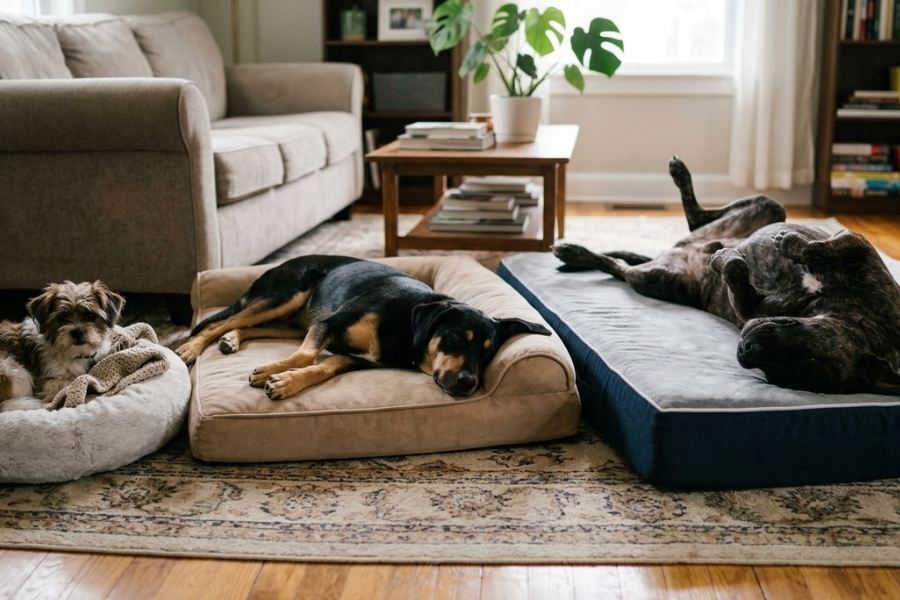
If they're bonded and enjoy sleeping together, yes. Size the bed based on both dogs combined. Two medium dogs sharing need at least a 48 x 36 inch bed. If they're not close, give each dog their own bed. For beds that suit multiple dogs, see our extra large bed guide.
The bottom line: don't overthink breed labels. Measure your mixed breed dog, observe their sleeping habits, and match those to the right bed type and size. The best bed is the one your dog actually uses, and that comes down to fit and comfort, not pedigree.
We’ve paused the on-page review box for now because we were getting too many spam submissions. If you’d like to share your experience, please send it through our contact form and I’ll add it manually. Thanks for understanding — genuine feedback really helps other dog owners. John Henry